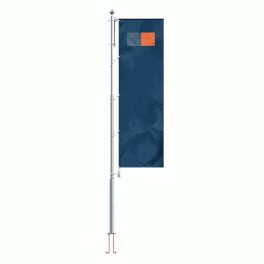
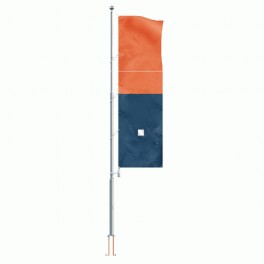
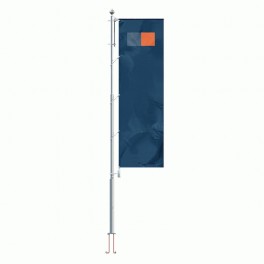
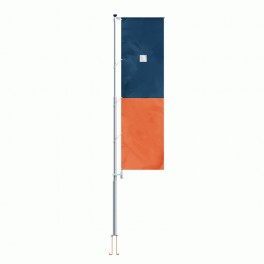
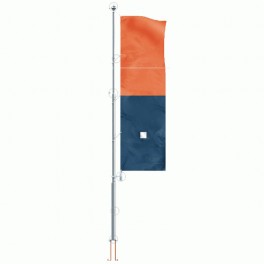
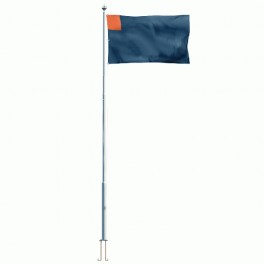
Flagpoles with a height of 9 m, ideal for flags and advertising purposes. Quality materials and resistance to weather conditions.
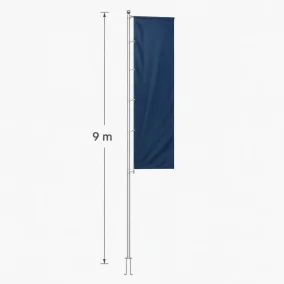
9-meter flagpole: when a flag becomes a full-fledged landmark in space
A 9-meter pole is already among the solutions that naturally define the character of a place. At this height, the flag ceases to be just an accessory to the building and becomes a visual point visible from a great distance, even in a rugged urban or industrial environment.
In practice, 9 meters is used where the goal is clear identification of the object – for example, at main entrances to areas, in logistics, or at buildings that need to be recognizable even before arriving at the site.
What changes at 9 meters from the perspective of construction and behavior
At this height, the pole significantly interacts with the wind. Every increase in height means greater leverage of the wind on the structure, which in practice raises the demands on anchoring, the quality of aluminum, and the precision of installation.
At the same time, the visual behavior of the flag changes – in a higher position, the wind has more space to unfold, making the flag appear more dynamic and more readable from greater distances.
Types of execution and their real significance in operation
Basic pole with external rope
- the simplest technical construction,
- quick installation and low maintenance complexity,
- visible rope on the outside,
- suitable for less frequented or closed areas.
In practice, it is used where the pole is under control and there is no risk of frequent manipulation by outsiders.
Internal rope
- protection against theft and vandalism,
- cleaner and more professional appearance,
- lower noise in strong winds,
- more comfortable long-term operation.
At 9 meters, internal guidance is no longer an additional function but a common standard in public and commercial spaces.
Rotating arm
The rotating arm has a significant practical effect at 9 meters. The flag remains unfurled even in light winds or when the wind changes direction, ensuring continuous visibility of the logo or symbolism.
Without the arm, the flag blends more with the pole, and its readability depends on current conditions.
Crank mechanism
At this height, the crank is a key element from the perspective of safety and handling. It allows for controlled lowering and raising of the flag without the need for dangerous work at height.
In practice, it significantly reduces the risk of fabric damage and wear of the rope during frequent flag changes.
Where a 9-meter pole makes the most sense
- main entrances to large industrial areas,
- logistics centers and warehouse complexes,
- company headquarters at busy communications,
- commercial zones with high visibility,
- public buildings with a representative function.
In these environments, the pole is no longer an accessory to architecture but an element that helps navigate the space.
What matters in the selection more than just height
At 9 meters, the differences between individual versions are not only reflected in price but especially in stability and comfort of use.
The greatest influence comes from the wind load of the specific location, the method of anchoring, and the frequency of flag handling. A pole in open country behaves completely differently than the same model in an urban environment among buildings.
An important factor is also the operational mode – with regular flag changes, the difference between a simple and an equipped system quickly manifests in time and safety of work.
Why 9 meters acts as a clear identification element
A height of 9 meters creates a strong vertical point in space that naturally attracts attention even before entering the object. The flag no longer serves just an aesthetic function but acts as a visual signal of the place.
In practice, this means that a well-chosen pole can influence the first impression of a company or institution even before the visitor crosses the gate of the area.